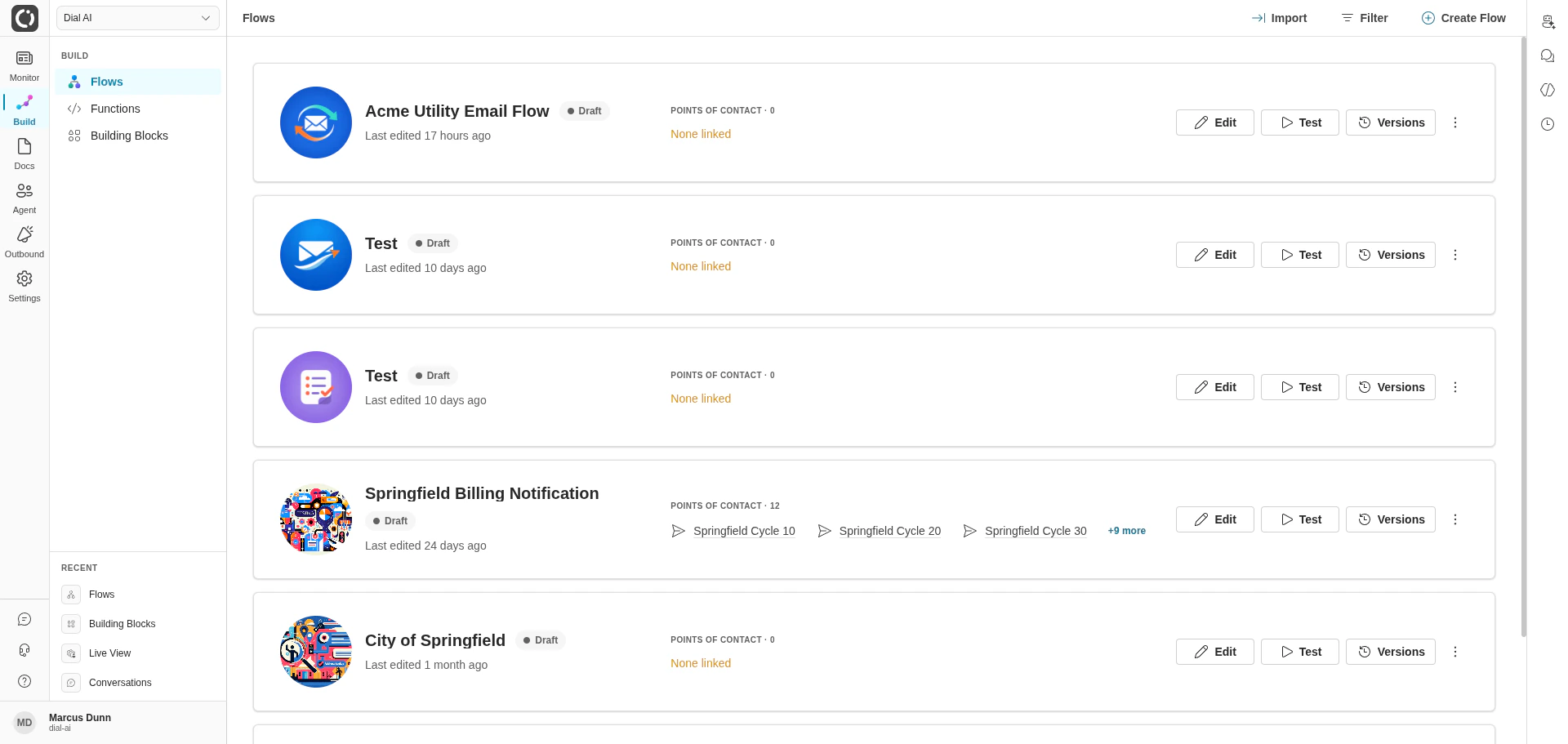
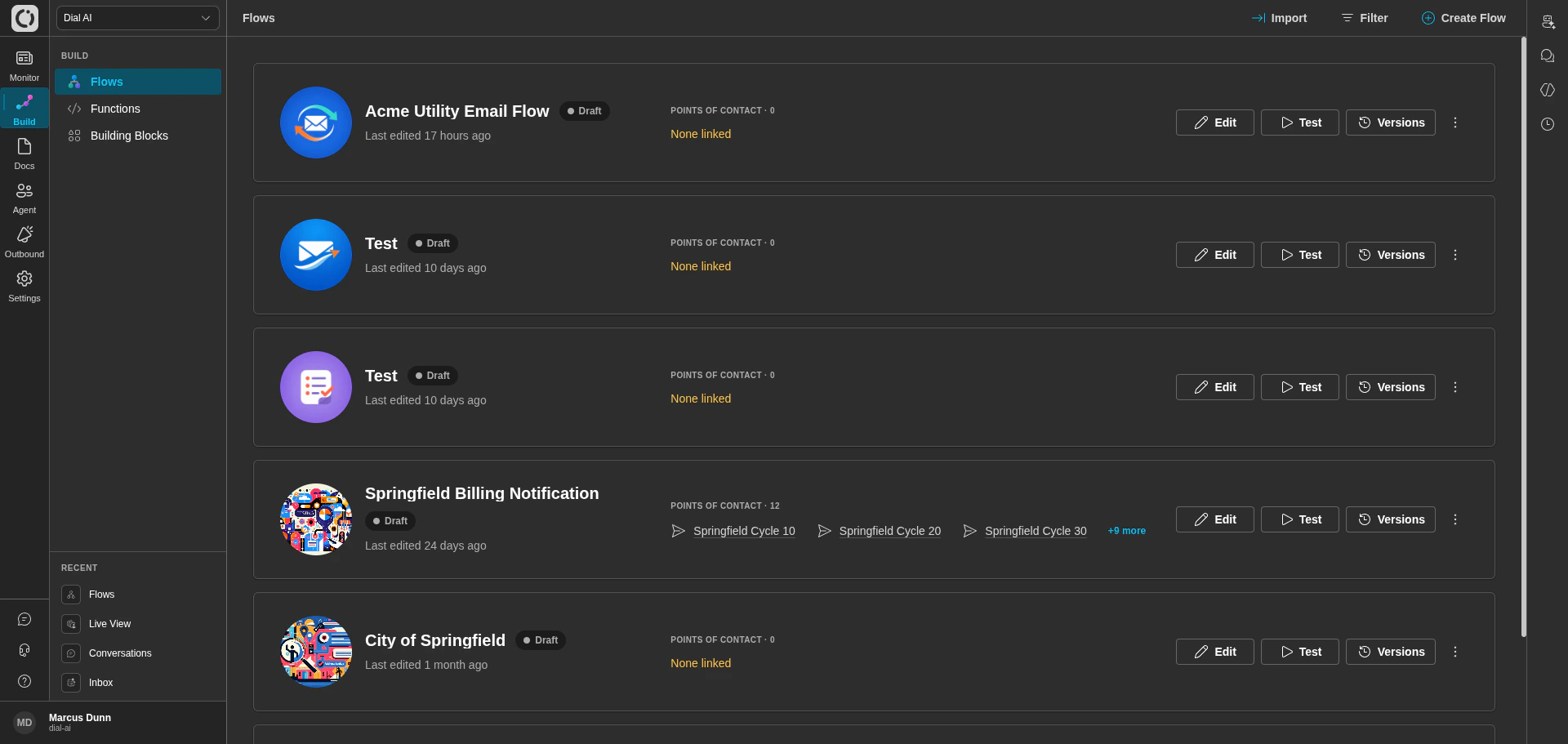
The Flows page — every flow in your tenant, ready to edit or test
Accessing the Flows page
Navigate to Build > Flows in the left sidebar.What’s on a flow card
Each card represents one flow and shows:- The flow’s name and an auto-generated thumbnail.
- Whether the latest version is Draft or Published.
- The last edited timestamp.
- The Points of Contact linked to this flow, with quick links to each.
Test menu
The Test menu lets you run a real-time conversation against the flow without involving a real customer or channel.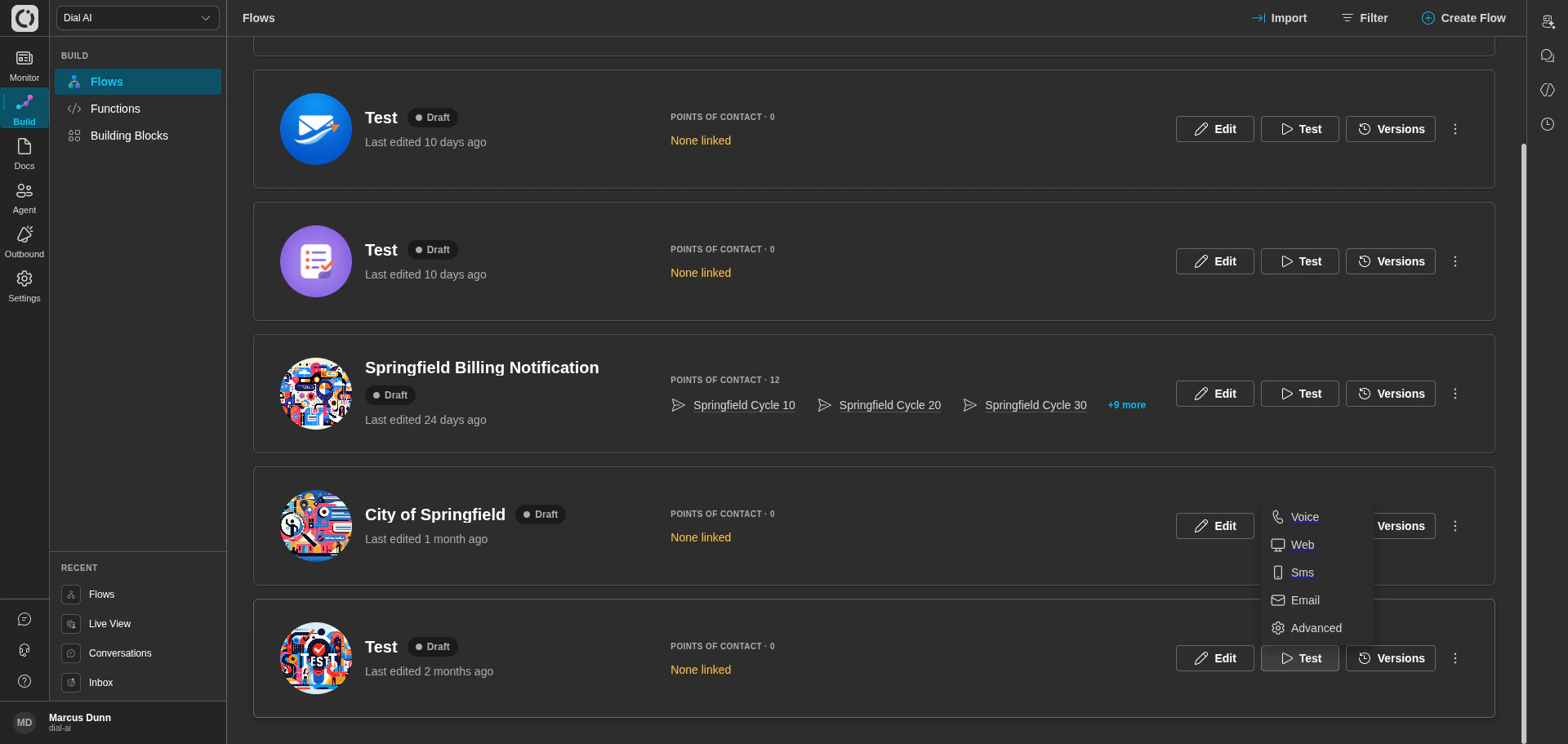
Test menu — pick the channel to emulate
- Voice — simulates a phone call. Use spaced letters (e.g.,
B r i a n) to imitate the customer spelling something out, just like over a real voice line. - Web — runs the flow as a web chat session with the same UI a customer would see.
- SMS — short, single-message turns.
- Email — async, formatted-body conversation.
- Advanced — opens a configurable test interface with platform-specific parameters.
More actions menu
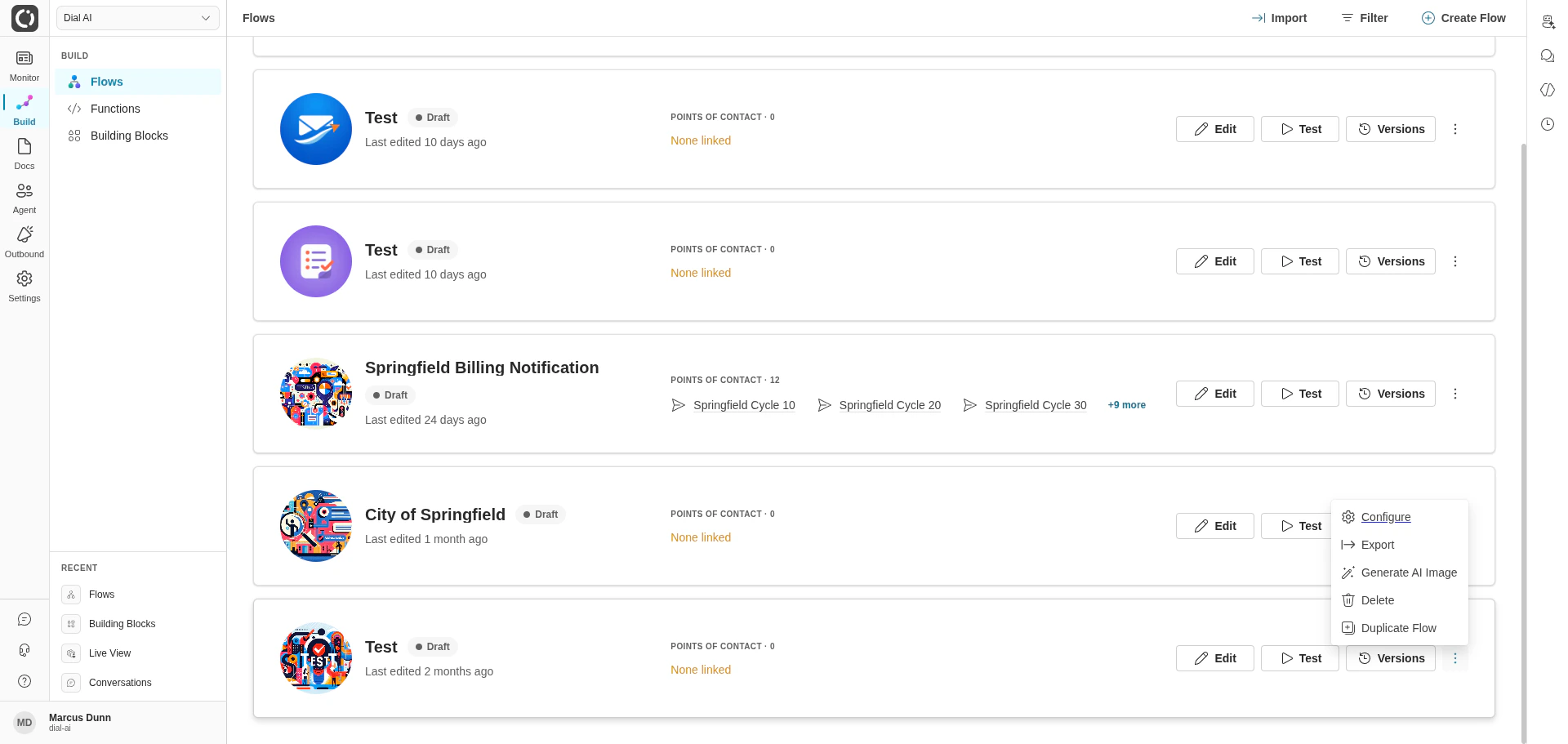
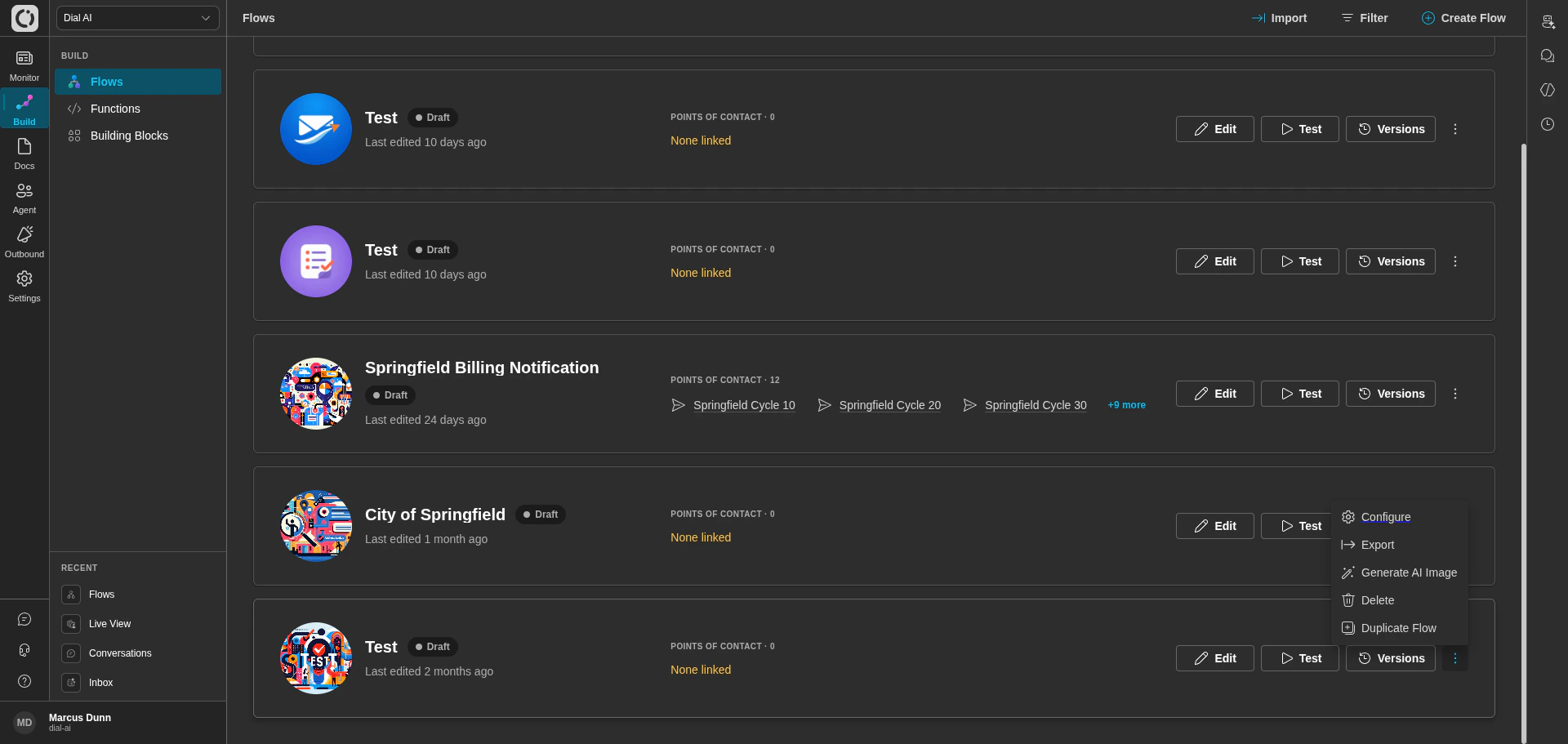
More actions menu on a flow card
- Configure — open the Configure Flow page. See Flow Configuration for the full reference of every tab.
- Export — download the flow as a portable JSON file.
- Generate AI Image — re-roll the auto-generated thumbnail.
- Delete — irreversibly remove the flow. Disabled if any POC still references it.
- Duplicate Flow — make a copy. Useful for testing experimental changes against a known baseline.
Importing a flow
The Import link in the top-right brings in a flow exported from this or another Dial AI workspace.1
Click Import
Opens the import dialog.
2
Pick the exported file
Drag-and-drop or Upload a file. Only files exported from a Dial AI instance work — hand-edited JSON is unsupported and will likely fail validation.
3
Upload
The flow appears in your grid as a fresh draft. Open it to confirm states, transitions, and function references resolved correctly.
Filtering
Click Filter in the top-right to open a sidebar that lets you narrow the visible flows by name. Useful when your tenant has tens of flows and you want to find one quickly.Creating a new flow
Click Create Flow in the top-right. You’ll land on the new-flow form to set the private/public name and description. After save, the flow opens in the editor with a single Initial state, ready for you to fill in. For a step-by-step walkthrough, see Building Your First Flow.Tips
- Keep flow private names clear for internal teams; reserve the public name for customer-visible contexts (auto-generated emails, voice greetings).
- Use Duplicate Flow before any large structural change — gives you a known-good rollback point.
- Spelling/phonetic accuracy matters most on voice calls: when testing Voice, watch for the AI agent reading numbers digit-by-digit and spelling names letter-by-letter where appropriate.
Related
Build your first flow
Step-by-step guide for a brand new flow.
Flow configuration
Every Configure Flow tab.
Testing flows
Test Platform, Test Scenarios, and version-aware regression checks.
Points of contact
Wire a flow to a channel.